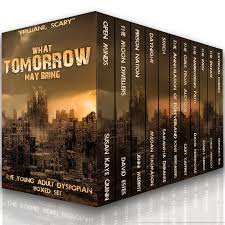
(I received this book for free in exchange for a review).
Open Minds: I felt that this was a fairly good book to start off the collection. The blurb was intriguing and I found myself getting so invested in reading it, I’m writing this review at 4am.
Telepathy isn’t a unique concept and neither is the idea of everyone sharing each others’ thoughts and emotions. I did think that this was a really good spin on that, though. Almost right from the start, I found myself able to relate to Kira as a character. The first person POV worked quite well and it didn’t keep shifting, like so many first person POV books I see.
The idea of Mindjacking was a pretty cool one, but also scary in many ways. It was good to see that none of the characters were truly good or evil. Well, apart from maybe one or two.
I found it easy to relate to Kira feeling like she was an outsider. I think that’s a feeling people tend to go through a lot in any case, without adding mind reading to the mix.
I definitely preferred Raf to Simon, although Simon did start growing on me towards the end of the book. I really liked Laney. Next to Kira, she might be my favourite character.
I’d definitely be interested in reading the other books in this trilogy in the future. Although the book did have a proper ending, I know there’s more of the story to be told.
The Moon Dwellers: The concept behind this book was a pretty intriguing one. It was nice to get a bit of background about the history of the world, from the perspective of one of the main characters.
I did get a bit confused about the switching between two different POVs at first, but by the end of the book, I was more used to it. It was good that the switching was more or less consistent.
I felt the strongest part of this book was the relationships the main characters had with others. I liked Cole and Tawni. I also liked Adele’s sister. And I really liked Roc.
There were a couple of things in the book that made me smile and even laugh out loud. I loved Cole’s banter with Adele and, of course, Roc’s banter.
I was also pleased to see that the characters weren’t perfect and did suffer consequences, as well as their skills coming into play when it made sense.
I wasn’t too keen on Tristan and Adele’s connection. I felt it was a bit too convenient – though at least there wasn’t any kind of profession of undying love.
I would be interested in reading the next books in this series in the future. If you like young adult dystopian books, then this one is worth reading – in my opinion.
Prison Nation: The plot of this book was a really interesting one. The idea of a whole prison nation, where babies born to convicted parents have to stay until their eighteenth birthday, was quite an intriguing one.
I quite liked Millie as a character. The way she reacted to things came across really well and I was able to easily empathise with her throughout the course of the book.
The concept of how the prison nation came into being was really interesting, though, of course, it’s not a fair system. Take out the lawyers, juries, etc. and all you have is one person’s word against another’s.
I did like how Millie’s relationship with Reed came across. I particularly liked Eddie as a character. I also felt really sorry for a lot of the people in the prison. It sounded like there was no hope for anyone who wasn’t a complete and utter jerk.
If there was a sequel to this book, I would be interested in reading it. This was quite well-written with an interesting storyline and the whole culture comes across really well. I do recommend reading it.
Daynight: I struggled a bit more to get into this book. It was a bit harder to read, due to the switching between different view points and changing of tenses.
The plot was a pretty good one, when I was able to figure out how everything linked together. Although I wasn’t too keen on the love triangle (I think things moved too quickly/were glossed over), I did think that both Ethan and Blake were fairly interesting characters and I liked that neither of them were bad, which would have put a damper on the love triangle thing.
The two different worlds were really interesting, though I would have liked some details about how the Second Chancers were brought to Thera.
I did like reading about the history of the Light and Dark members. The characters did all come across as really well-rounded, but the constant flashbacks did get a bit confusing after a while.
For the most part, the book was well-written, though I do think the tenses shouldn’t have switched so much. There were a few times I found myself having to keep reading just to find out what would happen.
I think I would be interested in reading more books in this series at some point in the future. The book kept me reading, despite the things I mentioned above.
Stitch: I think this book might be my favourite of the set so far. I was really intrigued by the start, though since I’d read the author’s commentary at the beginning, I really couldn’t see how everything was going to all fit together.
I thought I would find the connection between Alessa and her ghost difficult to believe, but I found it easy to get into as the book progressed. I did like the book better when it seemed like just a paranormal, but I still liked it even as the reality was revealed.
The dreams were pretty creepy, but when the source of them was revealed, it wasn’t quite what I’d been expecting. There was enough of a mystery to keep me reading and I liked reading about the relationships forming between the characters.
There were some things that happened in the book that did surprise me. This was a fairly good crossover of different genres and this first book has really made me want to read the other two in the trilogy – when I have the time.
The Annihilation of Foreverland: This was a fairly intriguing book as well. It was nice to see one with teenaged boys as the main characters – there are very few young adult books that I’ve read where the main character is male.
Waking up without knowing for sure who you are must be a really scary thing to experience. I thought it was interesting how, instead of not having any memories, the characters had too many of them; so it was constant confusion over what was real to them and what was fake.
For the most part, I did find the characters interesting. The girl was especially fascinating and I did like Danny and Reed. (I really empathised with Reed at times).
I did figure out what was going on fairly quickly, but the book still succeeded in keeping me entertained throughout reading it. The idea of Foreverland was quite an interesting one. The Investors were creepy.
I do have another Foreverland book waiting to be read on my Kindle. I already wanted to read it, but reading this first book has just made me want to read the next one even more. I did notice one or two errors in this book, but for the most part, it was a really good read.
The Girls from Alcyone: This was almost a dystopian within a dystopian. There were some glimpses of what the world the characters came from was like, but for the most part, the main focus was on the girls.
I felt this book was also interesting in that the main characters were mostly female. I could relate fairly quickly to Sigrid and I did like Suko. The way the relationship formed between the two came across as really realistic and natural – it made sense that their relationship would develop in that way.
I would have liked a bit more information about what exactly made the girls so different. They weren’t similar in appearance and I was somewhat confused about how the genetic thing worked. I would have liked some more background on that.
The writing of this book came across really well and I found it really easy to picture what was going on inside my mind. I liked the friendships Sigrid formed with other characters and the loyalty that came across really well.
There was a point in the book where I was somewhat worried that everything would become too easy. I think the author did a really good job of avoiding that, though – the characters weren’t perfect and did suffer through consequences when things went wrong.
I would probably be interested in reading more books by this author and in this series in the future.
The Narrowing Path: I’ve always had some fascination with the concept of fighting for survival. The first Hunger Games book was quite entertaining, though the second and third a little less so.
I found the character Bowe to be quite a difficult one to get behind at first. He certainly wasn’t the conventional hero and there were a few times at the beginning where I didn’t like him very much.
I didn’t think it was necessary to have the first part of the book be written in first person. The first chapter was intriguing, but it did throw me a bit to have the rest of the book written in third person.
The society was quite an interesting one. It was strange how many of the characters seemed to just accept their inevitable demise. Although I couldn’t figure out how the society had got to that point, it was quite a unique spin.
By the end of the book, I did like Bowe as a character much more. Although his ideas were really dangerous and potentially suicidal, I really did admire how he stuck to his ideals through everything.
I felt this book showed Bowe’s journey as a character remarkably well. Although I had some confusion over what all the words meant, I was less confused by the end.
I particularly liked Bowe’s relationships with the other characters, too. It showed quite well that he had to rely on his wits and didn’t have much fighting prowess. And he wasn’t perfect, either, which is always good.
There were some moments in the book where I found myself laughing or smiling. I’d definitely be interested in reading the other two books in this series.
The Rain: I don’t think many people like it when it starts raining – particularly when the rain comes down heavily. But I don’t think I’ve ever thought about what it might be like to have the rain falling constantly, day in and day out, for years.
I felt the author depicted the breakdown of society particularly well, though I couldn’t quite figure out how so many people became cannibals.
I did find the book a little difficult to read at times, if I’m honest. Quotation marks were missing a lot more than they were used and there were several times I couldn’t figure out when the main character was speaking or just thinking.
The flashbacks were pretty interesting to read, but they did keep striking without warning, which is a bit hard to understand. I also found it interesting how differently Tanner and Russell viewed things, given that one remembered the time before the rain and the other didn’t know anything else.
I thought it was good that the author did show the consequences of the constant rainfall – people becoming ill and suffering from infections.
I liked the fact that there was a dog who joined the group, too. I wasn’t so sure about Dusty. I think I’d have to read the next book to decide if I do like this world and the characters.
Virulent: The Release: I thought it was good that this book dealt with the breakdown of society with the virus that was released.
I felt that the author did a good job of establishing the characters before the virus hit. It meant that I cared about them much more as everything broke down all around them.
I didn’t think much of any of the surviving teachers, I have to say. In my opinion, they didn’t care even one jolt about the students who were in their charge, even before one of them turned worse.
I think it was good that there was quite a variety of different reactions to the virus. I was a bit confused about just how long the technology was active for, though – it gave out much slower than I would have expected.
I think being left alone in the world is a feeling that’s particularly scary. The main characters did do a good job of surviving, but I felt there was less foreshadowing than there could have been. Flashbacks were suddenly used right before they became relevant.
I did really like Darla as a character, even though I wasn’t sure about her motives when she first appeared.
This book was mostly well-written and I did really enjoy reading it. I’d definitely be interested in reading the next book/s in the series.
Well… this was a really long read. I figured out that, combining all the books, it took the total amount of pages to 3000. I think this has beaten the Bible for the longest book I’ve ever read – though the Bible might work out at the same amount of words, given the tiny print and use of columns in a lot of versions.
Young adult dystopian books aren’t always the sort of genre I would choose to read, but when this selection was offered, I couldn’t resist. Some of the books were a bit easier to read than others and there were books that I liked more in this selection.
On the whole, I do think it’s worth getting this collection. It’s a good introduction to a lot of different authors and series and all of the books are different in their own way. I’ve met a lot of different characters and I think there are many things about all of these books that will stick in my mind for a long time now that I’ve reached the end.


 Ink of Blood