I know…it’s been a long time since I’ve posted here! A lot has happened, but we’re now in a new year, and I have several resolutions for 2026. Including being more active with writing my reviews. And reading more.
Apart from that, I also want to start learning to drive this year. And make meal plans that I actually stick to. Oh…and actually work properly on my writing and perhaps even get something close to submitting to a publisher/agent this year. So no pressure at all!
Do you have any New Year’s resolutions? Feel free to share them!
Anyway…onto the review.
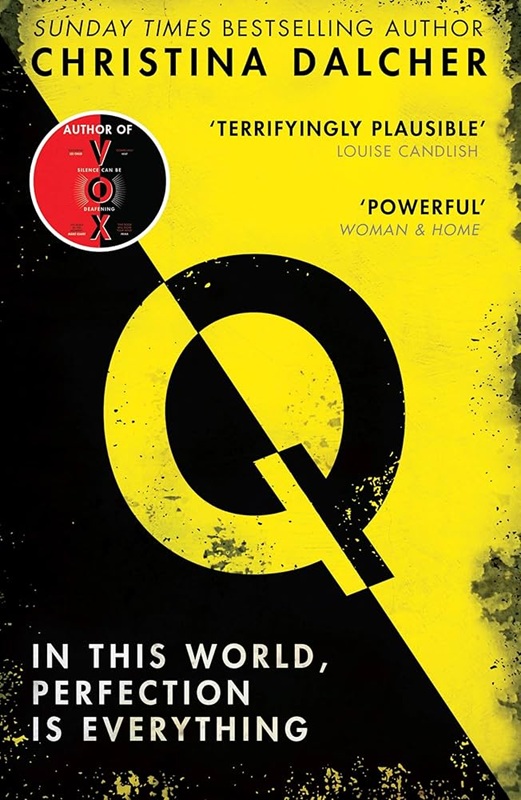
So, this was the first book I read in 2026, and…I’m a little disappointed, to be honest. Reading the blurb, I was quite interested in it. I read a huge amount of genres, but a dystopian that feels quite close to the world we live in now is always something that catches my attention. And the idea of everyone having a Q score that dictates everything about them, including their school placements, was really interesting…at least on the surface.
One main problem I had with the idea of the Q score was that I didn’t really know what it was supposed to measure. I originally thought that it was supposed to indicate a person’s level of intelligence, which would make sense, considering the amount of tests schoolchildren have to take. But then things like sick days affect Q scores, which…okay, I can kind of get behind that. But someone’s Q score being affected by their sibling’s behaviour seems really odd to me. I mean…considering that one of the main character’s children ends up being sent to a yellow school, wouldn’t something like that affect her family’s Q scores? But there’s nothing that’s mentioned about that.
There were some good parts to this book. It’s true that a lot of the views and politics actually do reflect what people are saying and posting about now, but…there were times I felt things were repeated when they didn’t need to be. Like one of the people who voted for the new system implied that she did so believing her own daughter would never be affected. And then that was repeated at least twice over, which was unnecessary.
I did feel that Elena wasn’t nearly as intelligent as the narration tried to make her out to be. There were a lot of choices she made and things she did that, as someone as intelligent as she was supposed to be, really should have done better. The two friends she made were more prepared than she was for the yellow school she went to…and it’s really clear that she had no plan for actually rescuing her daughter. And her reliance on Malcolm, given their history, just felt incredibly foolish.
I would have preferred there to be much fewer, if any, flashbacks. Most of them seemed entirely unnecessary, and those like the scenes after giving birth to Freddie just reiterated what had already been confirmed through the book. And the time in the yellow school was actually a much smaller part of the plot, considering how important the events were to the ending…which, in my opinion, was way too dragged out in a way that was not only unnecessary but seemed entirely unrealistic.
I think the book would have been much better and engaging if either Freddie or Ann had been the main character, not their mother. Despite the fact that Elena apparently came up with the idea for cards (or inspired them? I actually didn’t really understand how it went from that to their whole nation adopting the Q score), she felt like a really passive character…and, at times, was actually pretty boring. I just couldn’t engage with her for most of the book.
On the whole, I’m glad I gave this book a chance and did read it (especially as I was gifted it for Christmas), but I think it could have been better. The flashbacks could have been cut out, and the narrator could have been much closer to the problems in the society than someone who felt removed until it affected her personally. I mean…imagine being at a silver school with a group of your friends, and some of them get dropped to the lowest possible school…even though you know they’re too smart for that? It would feel more impactful to see the events through the eyes of someone who has grown up in that society.




 Ink of Blood